The Way

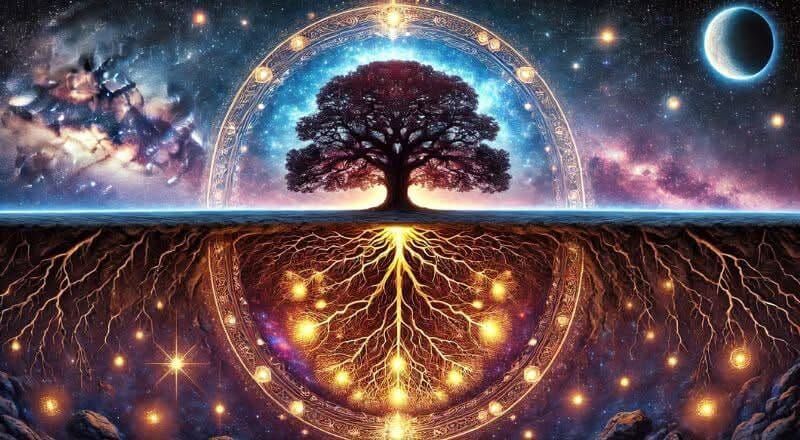
Have you noticed that everything is moral these days? News, entertainment, media don’t just report what is. They preach a moral message, intended to make you a “better” person. But what is the basis of this morality?
Reality is not morally neutral. There is a Way built into things: into nature, human beings, conscience, family, society, suffering, death, desire, and duty. Man does not invent it. He discovers it, obeys it, violates it, or is broken against it.
It isn’t mystical. We all know it. These truths are self-evident. All religions speak of it. It is a shared insight into human nature.
CS Lewis in his book Abolition of Man called it the Tao, which means The Way. Stoics called it living according to nature. Some call it natural law or the moral order. Christians call it general revelation.
There is an objective order to reality. Human flourishing comes from conforming the soul, the will, and the life to that order.
Reality has a grain. You can live in alignment with the grain of reality or against it. Freedom is not doing whatever you want. Freedom is becoming rightly aligned with your purpose. It brings satisfaction and fulfillment.
You can see the polarization in society where people align themselves either with or against the grain. It isn’t necessarily religious. It is woven into the fabric of life.
We all know that:
- There is order
- There is right and wrong
- We are accountable
- Virtue is better than vice
- Pride corrupts
- Truth matters
- Self-control is necessary
- Gratitude is fitting
- Death is serious
- There is a higher power
And yet there is a strong force in society against the grain. It denies the senses. It ridicules common sense. It fights whatever is good or true or just, replacing it with a counterfeit morality that looks like the real thing, but without the substance.
A human being is not just appetite, emotion, will, or self-expression. We have design.
Across traditions, man is seen as:
- rational
- moral
- social
- spiritual
- limited
- responsible for choices
That is why duty, courage, self-control, truthfulness, justice, reverence, and love recur almost everywhere.
The noble life is not the easiest life. It is the rightly ordered life.
This is why courage, temperance, justice, wisdom, humility, fidelity, patience, and compassion appear again and again. These virtues are not arbitrary religious rules. They are ways of becoming aligned with reality.
Truth is sacred. Lying, self-deception, propaganda, flattery, and rationalization destroy the soul because they detach man from reality.
To live well, one must first be willing to see things as they are.
The common Way almost always requires some form of self-denial, because the self becomes corrupt when it makes itself ultimate.
The good life requires reverence toward something higher.
The universal moral law rejects selfishness and affirms duties toward parents, children, neighbors, strangers, the poor, the weak, and the community.
Even where the language differs, there is a recognizable moral pattern:
- Do not betray.
- Do not murder.
- Do not steal.
- Do not bear false witness.
- Honor father and mother.
- Protect the weak.
- Keep faith.
- Rule yourself.
- Seek wisdom.
- Give thanks.
The moral law is not a private invention. It is recognizable across cultures.
Christianity agrees that much can be known from nature, conscience, and reason. It does not deny the Tao, natural law, Stoic nature, or the moral insights of pagan wisdom. It says they are partial witnesses.
Christianity is more than vague “spirituality”. It adds revelation, redemption, and union with God.
Nature can tell man there is a moral order.
Christianity tells man who made it.
Nature can tell man he is guilty.
Christianity tells man how guilt is forgiven.
Nature can tell man he should be virtuous.
Christianity tells man he must be reborn.
Nature can tell man he is mortal.
Christianity proclaims resurrection.
Nature can suggest Providence.
Christianity reveals the Father.
Nature can show the Logos as rational order.
Christianity says the Logos became flesh.
The Stoic can say: conform your will to nature.
The Taoist can say: return to the Way.
The moralist can say: obey conscience.
The philosopher can say: pursue the Good.
But Christ says:
“I am the way, and the truth, and the life.”
In other words, we are not merely following moral instructions. We are following a person. It is a personal union with our Creator.
So then, do not merely “Live according to nature.” Rather, be reconciled to the One who made nature and be transformed by Him.